

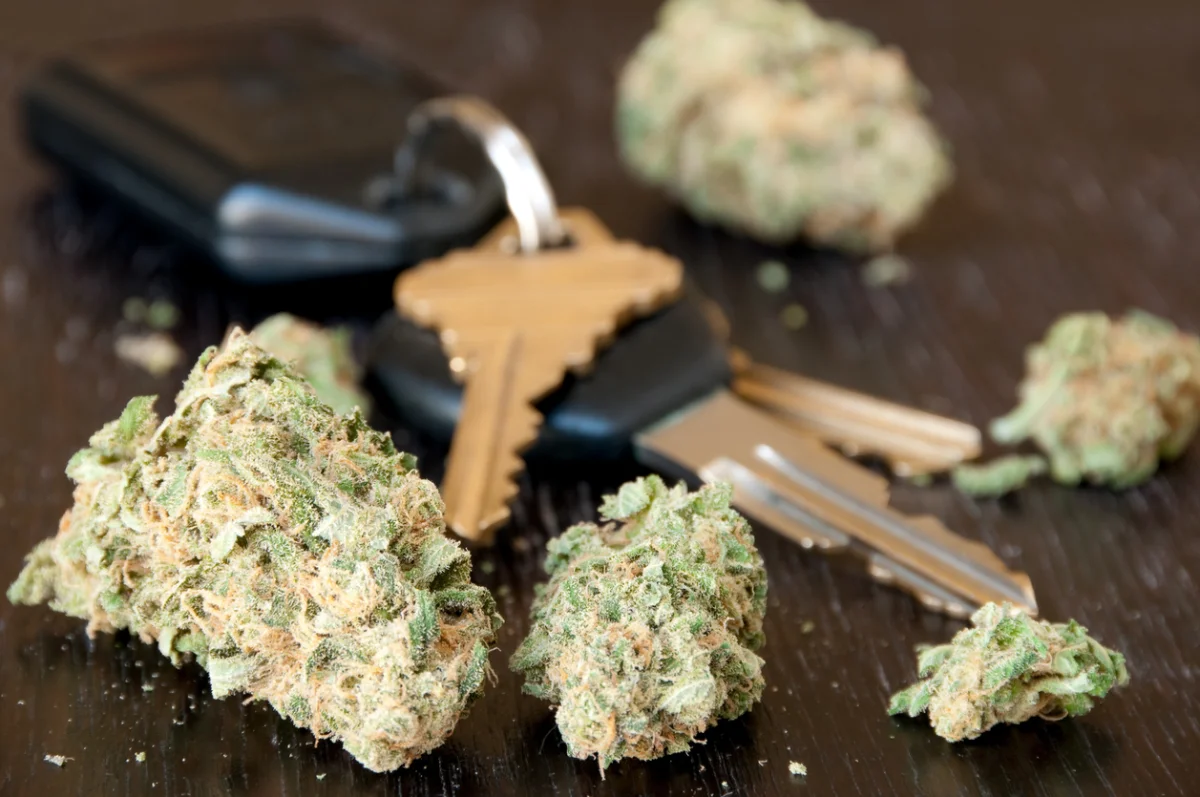


If you are asking, can you get a DUI for weed? The answer is an emphatic yes. But the path from a traffic stop to a conviction is far from a straight line. Proving impairment by marijuana is significantly harder for the state than proving alcohol impairment, provided you have the right DUI defense team on your side.
With the legalization of recreational possession in the Commonwealth, a dangerous misconception has taken root. Many drivers believe that because cannabis is legal to possess, the laws surrounding driving with it have softened. This could not be further from the truth. In fact, Virginia’s laws on drugged driving are aggressive, complex, and often unfair to responsible users.
In this comprehensive guide, we will explore the depths of Virginia’s drugged driving laws, dismantle the junk science often used by police, and explain exactly how an experienced attorney can help protect your future.
The Legal Reality: Understanding Virginia Code § 18.2-266
To understand the risk, we first have to look at the law itself. Most people associate “DUI” strictly with alcohol, but the statute governing impaired driving in Virginia, Code § 18.2-266, is a “catch-all” law. It does not just cover beer and liquor; it covers anything that affects your brain and motor skills.
The law specifically makes it unlawful for any person to drive or operate a motor vehicle while “under the influence of any… narcotic drug or any other self-administered intoxicant or drug of whatsoever nature, or any combination of such drugs, to a degree which impairs his ability to drive or operate any motor vehicle safely.”
This phrasing is critical. The term “self-administered intoxicant” is broad enough to include everything from illegal narcotics to prescription anxiety medication, and yes, legally purchased cannabis.
The “Per Se” Problem vs. The Impairment Standard
When it comes to alcohol, the law is mathematically precise. We have a “per se” limit of 0.08% Blood Alcohol Content (BAC). If a breathalyzer says you are at 0.08% or higher, the law presumes you are intoxicated, regardless of how perfectly you were driving. The number itself is the crime.
There is no such “per se” limit for marijuana in Virginia.
Unlike some other states that have set arbitrary limits (such as 5 nanograms of THC per milliliter of blood), Virginia has acknowledged—at least implicitly—that THC affects everyone differently. A habitual daily user might have a high level of THC in their blood while being completely sober, whereas a first-time user might be impaired with a very low level.
Because there is no magic number to prove guilt, the Commonwealth’s attorneys face a higher burden of proof. They cannot simply wave a lab report at the jury and rest their case. They must prove actual impairment. They must convince a judge or jury that the specific amount of cannabis in your system directly degraded your ability to drive safely at the time of the arrest.
This distinction is the cornerstone of your defense. It creates a gray area that police often try to fill with subjective observations and pseudo-scientific tests, but it also provides a skilled Virginia marijuana DUI defense attorney with ample room to fight the charges.
The Anatomy of a Marijuana DUI Arrest
If there is no breathalyzer for weed, how do police build a case against you? The process is a combination of psychological pressure, subjective testing, and biological analysis. Understanding this process is the first step in protecting your rights.
The Stop and The “Odor” Defense
For decades, the smell of marijuana was the “golden ticket” for law enforcement. If an officer claimed they smelled “burnt marijuana,” they had probable cause to search your entire vehicle, your pockets, and your passengers.
However, the legal landscape shifted dramatically with the enactment of Virginia Code § 4.1-1302. This law explicitly states that no law enforcement officer may lawfully stop, search, or seize any person, place, or thing solely based on the odor of marijuana.
This is a massive victory for civil rights, but do not be misled into a false sense of security. While the smell alone cannot justify a search, it acts as a red flag for the officer. Once they smell it, their radar is up. They will immediately start looking for other “indicia of impairment.” They will stare at your eyes to see if they are bloodshot. They will listen to your speech to see if it is slurred or slow. They will watch your hands for tremors.
If they can combine the odor with just one other observation—like you fumbling for your license or having glassy eyes—they can transition the stop into a full-blown DUI investigation.
The Interrogation Trap
Once the officer suspects DUI for cannabis in VA, they will often try to get you to confess before you even realize you are a suspect. They might say something casual like, “I smell a little weed. When was the last time you smoked? If you’re honest, we can get this over with.”
This is a trap. You are not required to answer this question. In fact, answering it is often the most damaging thing you can do. If you admit, “I smoked two hours ago,” you have just handed them a confession of driving after consuming a drug. If you say, “I smoked last night,” you have admitted to having the substance in your system.
The best response is always a polite refusal to answer questions without an attorney present.
Why Standard Field Sobriety Tests Fail for Weed
If the officer suspects impairment, they will ask you to step out of the car for Field Sobriety Tests (FSTs). You have likely seen these on TV: following a pen with your eyes, walking a straight line, and standing on one leg.
Here is the dirty secret of Virginia’s drugged driving laws enforcement: These tests were designed and validated for alcohol, not marijuana.
Let’s look at why this matters:
The Horizontal Gaze Nystagmus (HGN) Test:
This is the test where the officer moves a pen or light back and forth in front of your face. They are looking for “nystagmus,” which is an involuntary jerking of the eyeball. Alcohol causes this jerking to become very pronounced. However, scientific studies have repeatedly shown that cannabis does not cause HGN. A person who is incredibly high on marijuana will usually have perfectly smooth eye tracking.
Despite this, officers will often administer the test anyway. If they claim you “failed” it, they are often either mistaking natural eye movement for nystagmus or are applying an alcohol-based metric to a drug that doesn’t work that way.
The Walk-and-Turn and One-Leg Stand
These are “divided attention” tests. They require you to listen to instructions while performing a physical task. While marijuana can affect balance and attention, these tests are notoriously unreliable even for sober people. Nervousness, fatigue, wind, passing traffic, footwear, and age can all cause you to step off the line or put your foot down. When an officer scores these tests, they are looking for failure, not success.
The Modified Romberg Balance Test
Recognizing that standard tests don’t work well for drugs, some officers use the “Modified Romberg.” They ask you to close your eyes, tilt your head back, and estimate when 30 seconds have passed. They are looking for two things: whether your internal clock is sped up or slowed down, and whether you have “eyelid tremors.” This test is highly subjective. A “tremor” to one officer might be normal twitching to another, and estimating time is difficult for anyone under the stress of an arrest.
The Role of Drug Recognition Experts (DREs):
If a standard patrol officer is unsure, they may call in a “Drug Recognition Expert” or DRE. These are officers with specialized training in identifying drug impairment. They use a 12-step protocol that includes taking your pulse, checking your blood pressure, and examining your pupils in a dark room.
While this may sound scientific, it is largely based on clinical intuition. A DRE might claim that your elevated pulse and dilated pupils prove you are under the influence of cannabis. However, being pulled over by the police is a terrifying experience that naturally raises your pulse and blood pressure! The “science” of DREs is often debated in court, and a skilled attorney can frequently expose the flaws in their conclusions.
The Blood Test: Active THC vs. Metabolites
If you are arrested for marijuana DUI in Virginia, you will not be given a breathalyzer. There is no breath test for weed currently in use by police. Instead, they will transport you to a hospital or clinic for a blood draw.
Under Virginia’s implied consent law, by driving on public highways, you have agreed to submit to this testing if arrested. Refusing the test is a separate civil offense that results in an automatic one-year license suspension, regardless of whether you were actually impaired.
The “Snapshot” Problem
The blood test is the most critical piece of evidence, but it is also the most flawed. The issue lies in the biology of cannabis.
When you smoke marijuana, your THC levels spike almost instantly and then drop rapidly as the drug distributes into your fat tissues. By the time you are pulled over, interviewed, arrested, transported to the station, processed, and finally taken to the hospital for a blood draw, two to three hours may have passed.
The blood test is a “snapshot” of your blood hours after you were driving. It does not tell the jury what your THC levels were when you were behind the wheel.
Hydroxy vs. Carboxy: The Metabolite Defense
The most important distinction in marijuana DUI defense in Virginia is the difference between active THC and inactive metabolites.
- Hydroxy-THC: This is the psychoactive component that makes you feel “high.” It creates the impairment. It leaves the blood relatively quickly.
- Carboxy-THC: This is the metabolite—the waste product left over after your body processes the drug. It is not psychoactive. It does not cause impairment. Crucially, it can stay in your system for days or even weeks.
Prosecutors love to show a jury a lab report that says “Positive for Cannabinoids.” They rely on the jury not knowing the difference. If your blood shows high levels of Carboxy-THC but low or non-existent active THC, you were likely not impaired. You were simply a person who had used cannabis in the past.
Defending these cases requires an attorney who can act as a translator, explaining to the jury that the state’s “evidence” is nothing more than proof of history, not present guilt.
Penalties for Marijuana DUI in Virginia
Do not make the mistake of thinking a “weed DUI” is a minor traffic ticket. In the eyes of the law, it is identical to an alcohol DUI. It is a Class 1 Misdemeanor, which is a criminal offense that will stay on your record forever.
First-Time Marijuana DUI Consequences in VA
If you are convicted, the penalties are severe and mandatory:
- Jail Time: While many first offenders avoid active jail time, the maximum penalty is 12 months in jail. If there are aggravating factors—such as a collision or a passenger under 18—jail time becomes much more likely.
- Mandatory Fines: You will face a mandatory minimum fine of $250, but judges often impose higher amounts, up to $2,500.
- License Suspension: Your privilege to drive in Virginia will be suspended for 12 months. This is automatic and non-negotiable upon conviction.
- VASAP (Virginia Alcohol Safety Action Program): You will be required to complete this probation program. It involves intake interviews, substance abuse education classes, and costs hundreds of dollars out of pocket. You may also be subject to random drug testing during your probation.
- Ignition Interlock: This is the most frustrating penalty for many. Even though your DUI was for marijuana, if you want a restricted license to drive to work or school, the court will likely require you to install an ignition interlock device (a breathalyzer) in your car. You will have to blow into it to start your engine, despite alcohol never being part of your offense.
Secondary Consequences
The damage extends far beyond the courtroom. A Virginia marijuana DUI conviction creates a permanent criminal record.
- Employment: Virginia is a state heavily reliant on government contracting and military jobs. A DUI can result in the immediate revocation of security clearances, costing you your career.
- Insurance: Your car insurance premiums will skyrocket, often doubling or tripling, and your provider may drop you entirely, forcing you into high-risk pools.
- Travel: Countries like Canada have strict rules about admitting people with DUI convictions. A single mistake could bar you from international travel.
Medical Marijuana is Not a Defense
Virginia has a robust medical cannabis program, and thousands of residents hold valid medical cards. A common question is: “Does my prescription protect me from a DUI?”
The answer is no.
Code § 18.2-266 explicitly states that the fact that a person is “entitled to use” the drug (i.e., has a prescription) is not a defense to a charge of driving under the influence.
If you are prescribed Xanax or Vicodin and you drive while impaired, you can be arrested. The same applies to medical marijuana. While your attorney can use your medical status to explain the presence of metabolites in your blood (showing you are a regular, tolerant user rather than a reckless recreational user), the card itself is not a “get out of jail free” pass.
Conclusion
So, can you get a DUI for weed in Virginia? Absolutely. The Commonwealth takes these charges seriously, and the lack of a “legal limit” often results in sober, responsible drivers being prosecuted simply for having metabolites in their system from days prior.
The system is designed to process you quickly and get a conviction. Prosecutors rely on the stigma of drugs and the complexity of the science to secure guilty verdicts. You cannot fight this battle with excuses or by hoping the judge will be lenient. You need evidence, science, and aggressive advocacy.
If you or a loved one has been charged with a marijuana DUI, the clock is already ticking. Evidence disappears, memories fade, and procedural deadlines pass. Do not wait for your court date to start worrying about your defense. Contact Scott C. Nolan today to schedule a consultation and start building a defense.