



Virginia’s approach to DUI is broader than just alcohol. In Fairfax and across Northern Virginia, a traffic stop can quickly escalate into a serious Driving Under the Influence of Drugs (DUID) charge, even if you pass a breathalyzer.
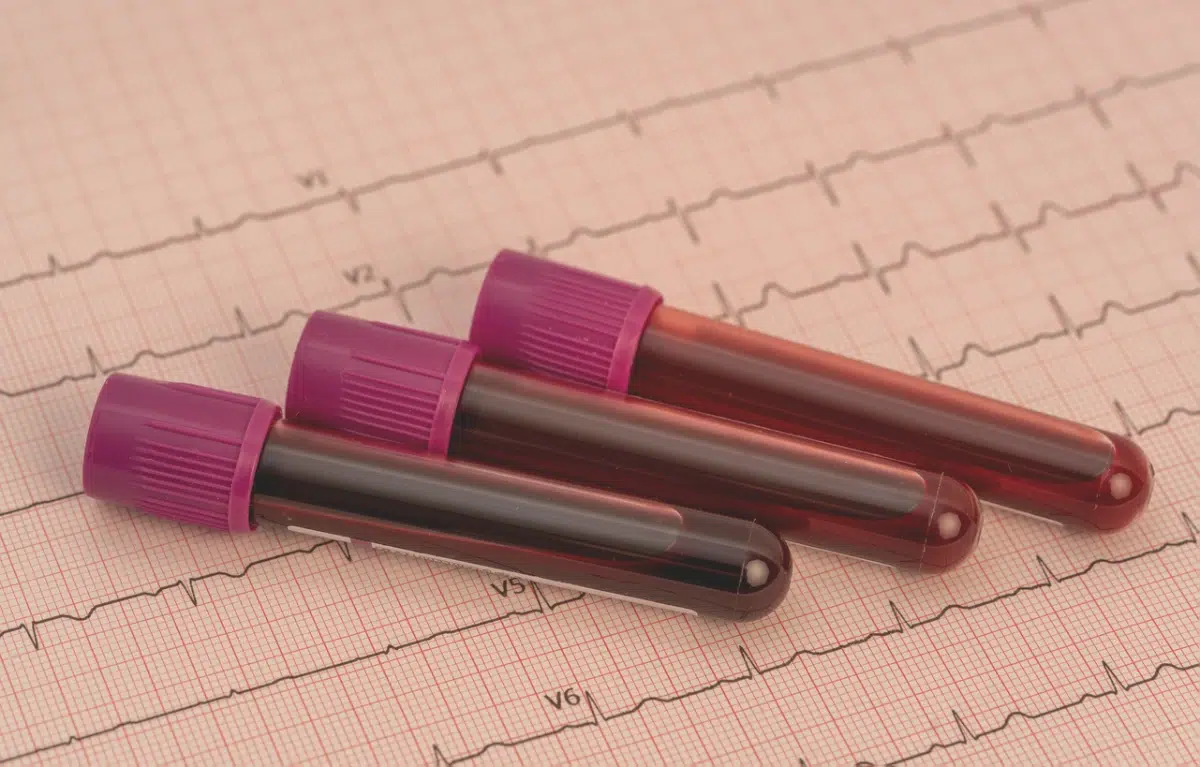
If an officer suspects drug impairment—whether from prescription medication, marijuana, or illicit substances—they can bypass the standard field sobriety tests and require a blood draw at a hospital. This critical piece of evidence is then rigorously tested for a wide array of intoxicating substances. Understanding that DUI blood tests in Fairfax definitively check for drugs is the first step in building a solid defense against what is a complex and often misunderstood prosecution.
Why Fairfax Police Order Drug Tests
In a standard alcohol-related stop, the police use an Intoxilyzer 8000 to measure the ethanol in your breath. This machine is designed for one thing: alcohol. It cannot see, measure, or even detect the presence of narcotics, prescription medications, or over-the-counter drugs.
When a Fairfax officer suspects that a driver is impaired but the roadside preliminary breath test (PBT) shows a 0.00% or a level inconsistent with the driver’s behavior, they immediately shift their focus to a DUID investigation. This is where the Fairfax DUID blood test explanation becomes vital. Under Virginia Code § 18.2-268.2, also known as the “Implied Consent” law, any person who operates a motor vehicle on a public highway in the Commonwealth is deemed to have consented to a chemical test of their breath or blood to determine its alcohol or drug content.
While you can choose to refuse, doing so in Virginia triggers an automatic civil “refusal” charge, which carries a mandatory one-year license suspension with no possibility of a restricted license for work or school. To avoid this, or because they believe they are sober, most drivers submit to the blood draw, unknowingly handing the state a “snapshot” of their internal chemistry that may be used against them months later.
How Police Test for Drugs in Blood DUI Fairfax
The journey of a blood sample is a vulnerable process. For the results to be admissible in a Fairfax court, the Commonwealth must prove a perfect “chain of custody.” Any break in this chain can lead to the evidence being suppressed.
1 . The Draw: A qualified medical professional (nurse or technician) must draw the blood using a non-alcoholic swab. Using an alcohol-based swab to clean the arm can contaminate the sample, leading to a “false positive” for ethanol.
2 . The Vials: The blood must be placed into two specific gray-top vials containing sodium fluoride (a preservative) and potassium oxalate (an anticoagulant). If these chemicals are missing or the vials are expired, the blood can ferment or clot, rendering the results scientifically useless.
- The Storage: The officer must maintain “custody” of the kit until it is mailed or hand-delivered to the DFS lab. If the kit is left in a hot patrol car for hours, the heat can degrade the sample.
- The Analysis: A state chemist performs the tests and issues a Certificate of Analysis. However, this certificate is just a piece of paper. You have a constitutional right to.
What Does the Lab Actually Look For?
When your blood is drawn at a facility like Inova Fairfax Hospital or the Fairfax County Adult Detention Center, it isn’t tested immediately. The officer seals the vials in a specific kit provided by the Virginia Department of Forensic Science (DFS). These vials are then transported to the regional laboratory (usually the Northern Virginia Laboratory in Manassas) for a comprehensive blood test.
It is important to understand that the lab does not test for every substance known to man. Instead, they follow a specific protocol designed to catch the most common “impairing” substances. The DFS typically utilizes a two-level testing approach:
Level I: The Alcohol Screening
Every DUI blood sample is first tested for ethanol (alcohol). If the results show a blood alcohol concentration (BAC) of 0.10% or higher, the lab often stops right there. In the eyes of the Commonwealth, they have enough evidence to secure a conviction based on alcohol alone, and they may choose not to spend the additional resources required for complex drug testing.
Level II: The DUID Screening Panel
If the alcohol level is below 0.10%, or if the officer specifically requested a drug screen, the lab proceeds to drug testing blood samples. This panel uses a technique called immunoassay screening, followed by more precise methods like Gas Chromatography-Mass Spectrometry (GC-MS) or Liquid Chromatography-Mass Spectrometry (LC-MS).
The standard panel includes:
- Cannabinoids: Both active THC and its inactive metabolites.
- Stimulants: Cocaine, benzoylecgonine (a cocaine metabolite), and methamphetamines (including MDMA/Ecstasy).
- Depressants/Benzodiazepines: Xanax (Alprazolam), Valium (Diazepam), and Klonopin (Clonazepam).
- Dissociative Anesthetics: Phencyclidine (PCP).
- Opioids and Narcotics: Heroin, Fentanyl, Oxycodone, Hydrocodone, and Methadone.
- Sleep Aids: Zolpidem (Ambien).
- Common Over-the-Counter Medications: Substances like Diphenhydramine (Benadryl) can also be flagged if found in high concentrations.
DUI vs. DUID Blood Testing Fairfax
In Virginia, there is a major difference in how the law treats alcohol versus drugs. For alcohol, we have a “per se” limit of 0.08%. If you are at or above that number, the law presumes you are impaired.
For most drugs, there is no such “magic number.” Virginia Code § 18.2-266(v) does establish specific thresholds for a few substances:
- Cocaine: 0.02 mg/L
- Methamphetamine: 0.1 mg/L
- PCP: 0.01 mg/L
- MDMA: 0.1 mg/L
If you test above these specific levels, the Commonwealth can argue for a presumption of impairment. However, for almost everything else—including marijuana, Xanax, or Percocet—there is no statutory number. The prosecutor must prove, through “the totality of the circumstances,” that the substance actually impaired your ability to drive safely. This often relies on the testimony of a “Drug Recognition Expert” (DRE)—an officer who claims to be able to identify drug impairment through physical signs.
The Role of the Drug Recognition Expert (DRE)
In many Fairfax DUID cases, the police will call in a DRE. This officer follows a 12-step protocol, checking your pulse, your pupil size in different lighting, and even looking for “muscle rigidity.”
While this sounds like a medical exam, it is performed by a police officer, not a doctor. Many of the “signs” they look for are highly subjective. For example, a DRE might testify that your “elevated heart rate” is a sign of stimulant use. An experienced defense lawyer will counter that an elevated heart rate is also a natural, physiological response to being arrested and facing life-altering criminal charges.
Why You Must Challenge the Blood Test Results
Many people receive their blood test results, see a list of drugs, and assume their case is over. This is a dangerous mistake. A blood test result is not a conviction; it is merely a piece of data that is subject to human error, mechanical failure, and scientific limitations.
When we defend these cases in Fairfax, we look for several “cracks” in the prosecution’s foundation:
1. The “Retrograde” Problem
The blood test tells us what was in your system at the time of the draw, which is often two to three hours after you were actually driving. Because drugs metabolize at different rates, it is scientifically difficult to prove exactly what was affecting your brain while you were behind the wheel.
2. Independent Testing
In Virginia, you have the right to have your blood sample sent to an independent laboratory for re-testing. This is a critical step. State labs are overwhelmed and sometimes make mistakes. An independent toxicologist can provide a “second opinion” that may contradict the DFS findings or reveal that the sample was degraded.
3. Attacking the Probable Cause
If the officer did not have a valid, legal reason to stop your car or to arrest you in the first place, the blood test—no matter what it shows—cannot be used against you. We meticulously review body-camera and dash-camera footage to see if the officer’s written report matches the reality of your driving behavior.
The Consequences of a DUID Conviction in Fairfax
A conviction for DUID in Fairfax carries the same weight as a standard DUI, but with added social and professional stigmas.
- Criminal Record: You will have a Class 1 Misdemeanor conviction that cannot be expunged in Virginia.
- Jail Time: Up to 12 months in jail, with mandatory minimums if your drug levels are particularly high or if this is a repeat offense.
- License Loss: An automatic 12-month suspension of your driving privileges.
- Professional Impact: For many in Fairfax, a drug-related conviction is a “death blow” to a security clearance or a government contract. Unlike an alcohol DUI, which is sometimes viewed as a “mistake,” a DUID implies the use of controlled substances, which federal agencies view with extreme scrutiny.
Conclusion
The question of whether DUI blood tests check for drugs in Fairfax is only the beginning of the conversation. The real question is: can the government prove that those substances actually make you an unsafe driver?
The “gray area” of Virginia’s drug laws is wide. Without a standardized “legal limit” for most substances, these cases come down to a battle of experts and the ability of your lawyer to expose the flaws in the officer’s observations and the lab’s procedures. You are not fighting a machine; you are fighting an interpretation of data.
If you have been subjected to a blood draw and are worried about what the lab will find, do not wait for the results to come back in the mail. The Commonwealth is already building its case against you. Start building your defense today.
Contact the Law Office of Scott C. Nolan for a consultation. Let’s look at the facts, the science, and the law to ensure that a legal gray area doesn’t cost you your future.