

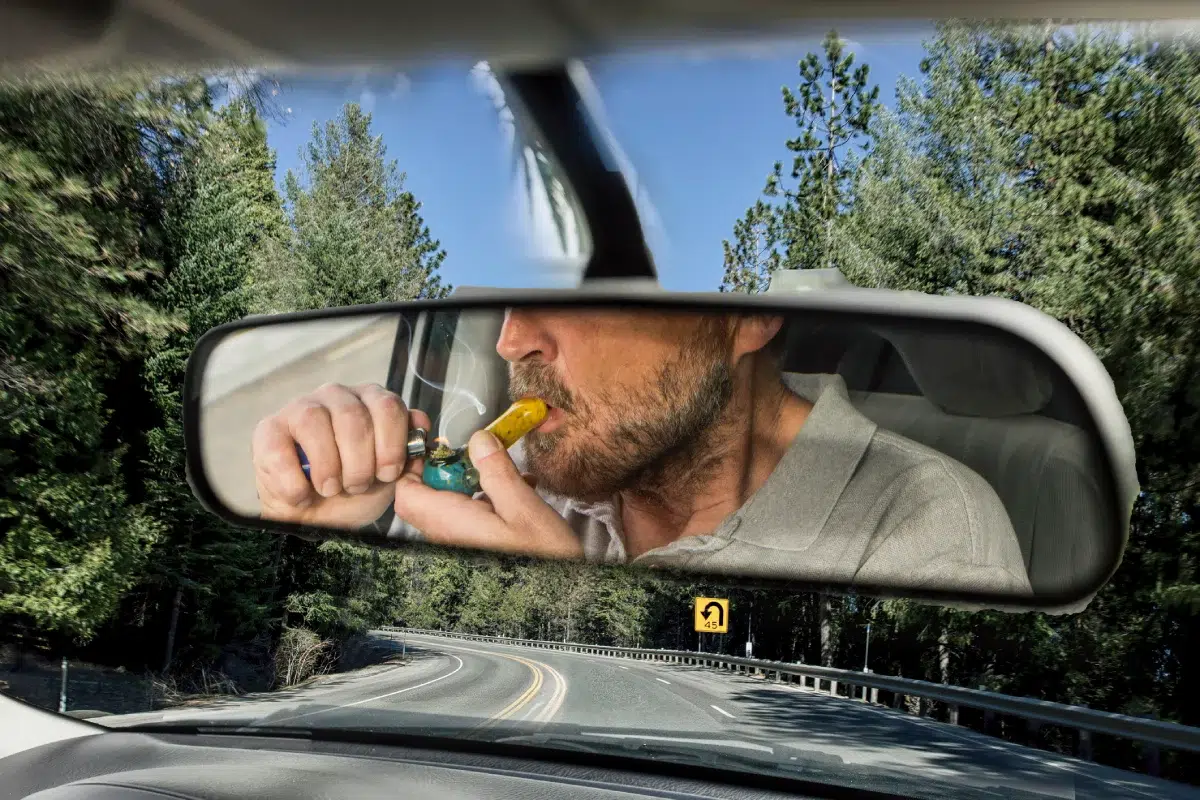


You smoked a joint with friends earlier in the evening. You waited a few hours, drank some water, and felt the effects wear off. You felt completely sober, safe, and in control. But then you saw the flashing blue lights in your rearview mirror. Now, you are asking a question that thousands of drivers face every year: how long after you smoke can you get a DUI?
The answer is far more complex than the clear-cut rules we have for alcohol. With alcohol, we have a general understanding of how the body metabolizes a standard drink. With marijuana, the science of impairment versus detection is murky, and the laws are often lagging behind the reality of cannabis use. The concept of driving under the influence applies differently to marijuana, as the presence of THC in your system does not always mean you are impaired at the time of driving.
If you are facing this uncertainty, you need to understand that the “safe” window for driving is not just about how you feel—it is about what the police can prove. At Scott C. Nolan, we have seen firsthand how easy it is for sober drivers to be wrongfully accused based on outdated science or biased observations. Impaired driving cases involving marijuana consumption are especially challenging, as proving actual impairment after use is difficult and often relies on subjective assessments. Whether you need a comprehensive DUI defense strategy or a specific marijuana DUI lawyer to help you navigate these charges, understanding the timeline of impairment is your first line of defense.
In this guide, we will break down the science of THC impairment, how law enforcement builds their case against you, and why you can still be charged with a DUI long after the “high” is gone. We will also explore how marijuana consumption complicates DUI laws, and address the key issues of dui laws and drugged driving that every driver should understand.
How Long Can THC Impairment Affect Driving?
When clients ask us, “How long after smoking weed can you drive legally?” they are often looking for a specific number of hours, similar to the “one drink per hour” rule of thumb for alcohol. Unfortunately, cannabis does not work that way. There is no universally accepted timeframe, and some individuals may remain impaired for longer than they realize, even after the noticeable effects have faded.
The Typical Window of Impairment
Generally speaking, the acute psychoactive effects of smoking marijuana—the “high” that alters your perception and motor skills—peak within the first 15 to 30 minutes. For most occasional users, these intense effects begin to taper off significantly after one hour and may be largely gone within three to four hours.
However, the question of how long THC impairment lasts for DUI charges is different from how long you feel high. Studies suggest that while the euphoric sensation may vanish after a few hours, subtle deficits in complex tasks (like driving at high speeds or reacting to sudden hazards) can persist for slightly longer. Actual impairment may last beyond the period of feeling high, even if you no longer notice obvious effects. However, the National Highway Traffic Safety Administration (NHTSA) and various studies acknowledge that impairment typically resolves long before the chemical traces leave your body.
Functional Impact vs. Chemical Presence
It is critical to distinguish between impairment and presence. Alcohol is water-soluble; it moves out of your system relatively linearly. Cannabis is fat-soluble. This means THC is absorbed into your fat cells and released slowly over time. How long THC stays in a person’s system depends on several factors, including body processes such as individual metabolism, body composition, and hydration. These factors influence how quickly or slowly THC is processed and eliminated from the body. You might smoke on a Friday, feel sober by Friday night, but still have detectable levels of THC metabolites in your system on Monday.
In Virginia and many other jurisdictions, the prosecution must usually prove that your ability to drive was impaired by the drug. They are looking for a functional impact—swerving, delayed reaction times, or inability to follow instructions—rather than just a chemical number. However, because science is still catching up, prosecutors often try to use the mere presence of THC to argue that you were impaired, even if you smoked days ago. THC and its metabolites can remain detectable in a person’s system long after any actual impairment has subsided, which complicates the use of blood tests as definitive proof of impairment.
Factors Influencing the Timeline
There is no single answer to weed DUI time window questions because biological and environmental factors play a massive role:
- Potency: High-concentration concentrates or “dabs” can result in higher THC blood levels that spike faster and may leave residual effects longer than low-grade flower.
- Method of Delivery: Edibles are the “wild card.” While smoking results in almost instant impairment that fades relatively quickly, edibles must be digested. The impairment might not start for two hours and can last for six to eight hours or more. Driving four hours after eating a brownie is significantly riskier legally and physically than driving four hours after smoking a joint.
- Biology: Your metabolism and body fat percentage dictate how long THC stays in your system.
Cannabis affects the body differently depending on these variables, influencing both the onset and duration of impairment as well as how long THC can be detected in blood tests.
How Officers Determine Whether You’re Still Impaired After Smoking
If there is no breathalyzer for weed that works as accurately as an alcohol breath test, how do police decide to arrest you? In these situations, law enforcement officers rely on various testing methods—such as blood, urine, and saliva tests, as well as field sobriety assessments—during DUI investigations to determine impairment. This is where the marijuana DUI detection times become subjective and dangerous for drivers, as officers attempt to determine impairment based on these methods.
Behavioral and Physical Indicators
When an officer stops you, they are building a case from the moment you roll down your window. Since they cannot rely on a roadside device to definitively prove you are high right now, they rely on what they call “indices of impairment.”
Common indicators they look for include:
- Odor of Marijuana: This is the most common trigger for a DUI investigation. However, the smell of burnt cannabis lingers on clothes and upholstery for days. Smelling like weed does not mean you are currently under the influence, but it is often enough to give an officer probable cause to investigate further.
- The Appearance of Eyes: Officers look for bloodshot or watery eyes. They also look for dilated pupils.
- Eyelid Tremors: During roadside tests, officers will watch your eyelids for tremors when your eyes are closed, which they are trained to associate with cannabis use.
- Cognitive Delays: Slowed speech, difficulty retrieving your license, or confusion about where you are coming from are all noted in the police report as signs of impairment.
Field Sobriety Tests (FSTs) and Cannabis
Standardized field sobriety tests (the Walk-and-Turn, One-Leg Stand, and HGN eye test) were designed and validated for alcohol impairment. Their accuracy in detecting cannabis impairment is heavily debated by defense attorneys and scientific experts alike, as these standardized field sobriety tests are unreliable for identifying marijuana intoxication. Studies show that officers often cannot accurately assess impairment from cannabis using these tests.
For example, the Horizontal Gaze Nystagmus (HGN) test—where the officer asks you to follow a pen with your eyes—is a primary indicator for alcohol presence. However, marijuana generally does not cause nystagmus (the jerking of the eye). If an officer claims you failed the eye test because of weed, that is a point your attorney can vigorously challenge.
Police may use modified tests, such as asking you to estimate the passage of 30 seconds (the Romberg Balance Test), as cannabis can distort time perception. However, these tests are highly subjective. An officer’s “observation” that you were wobbly or unfocused is an opinion, not a scientific fact. In some cases, a drug recognition expert may be called to conduct a more comprehensive evaluation of suspected marijuana impairment.
THC in Your Body vs. THC That Impairs You
To understand marijuana metabolites and DUI charges, you have to understand a little bit of chemistry. This is the area where the most wrongful convictions happen. Blood THC levels and blood THC concentration are often used as evidence in DUI cases, even though these measures have significant limitations and do not always accurately reflect impairment.
Tests may only detect active THC for a limited time after use, but detectable THC can persist in the body much longer, which complicates the assessment of actual impairment.
Active THC (Delta-9) vs. Carboxy-THC
When you smoke, Delta-9 THC (the active ingredient that makes you high) enters your blood. Its levels spike rapidly and then drop sharply as it is distributed to tissues and metabolized. Active THC is usually only detectable in the blood for a few hours to a day after use, depending on frequency. Law enforcement and laboratories use various testing methods—such as blood, urine, and saliva tests, as well as field sobriety assessments—to detect active THC and its metabolites, each with different detection windows and implications for assessing impairment or recent use.
However, your body breaks Delta-9 down into metabolites. The most common one tested for is Carboxy-THC (11-COOH-THC). This metabolite is non-psychoactive. It does not make you high; it does not impair your driving. It is simply a historical record that you have consumed cannabis at some point in the past.
The Problem with Urine Tests
In many states, if you are arrested for a DUI, the police may request a blood or urine test. Urine tests are notoriously unreliable for proving current impairment because they primarily detect these inactive metabolites. You could test positive on a urine screen weeks after you last smoked. Compared to urine tests, blood test results can show the presence of THC in your system, but they still may not accurately indicate current impairment. Saliva tests, often used in roadside testing, are considered more reliable for detecting recent marijuana use, typically within 24-72 hours after consumption.
If a prosecutor presents a positive urine test to a jury, they may imply that the presence of drugs means you were impaired. This is misleading. A positive urine test generally answers the question “Have you used drugs recently?” rather than “Were you high while driving?”
Blood Tests and the “Sober” DUI
Even blood tests can be problematic. While they are better at detecting active THC, regular users (chronic smokers) can have detectable levels of active THC in their blood for days, even when they are completely sober. This phenomenon—where tolerance leads to high blood levels without impairment—creates a dangerous legal trap. You could be pulled over on a Tuesday morning, perfectly sober, but have residual THC in your blood from the weekend, leading to a charge of DUI for marijuana after smoking days prior.
Marijuana impaired driving laws often fail to distinguish between actual marijuana intoxication and the mere presence of residual THC, since current laws typically rely on THC blood levels, which do not reliably indicate current impairment.
How Time Since You Smoked Affects DUI Risk
Understanding how long cannabis stays in your system for DUI purposes requires looking at the timeline of risk. The risk of getting a DUI after smoking marijuana depends on several factors, including potential impairment and the influence of marijuana on your driving ability. Whether or not you can be charged with a DUI depends on detection methods, individual metabolism, and legal considerations, as laws often focus on blood THC levels rather than actual impairment.
The “Danger Zone”: 0 to 3 Hours
Driving immediately after smoking is where the legal and safety risks are highest. This is when THC levels and impairment for DUI stops are most correlated. Your reaction times are likely slowed, and your multitasking ability is diminished. The impairing effects of cannabis are most pronounced during this period. If you are stopped during this window, physical signs of impairment (dilated pupils, odor, confusion) will be obvious.
The “Grey Zone”: 3 to 12 Hours
This is where confusion arises. You may feel sober. The psychoactive effects have worn off. However, can police arrest you for DUI hours after smoking in this window? Yes.
- You may still have the odor of cannabis on you.
- Your blood may still contain active Delta-9 THC—even a trace amount can be used as evidence for DUI charges.
- You might be tired (the “burnout” phase), which can mimic impairment.
- If you commit a minor traffic infraction (like rolling a stop sign), an officer may attribute it to drugs rather than a simple error.
The “Residual Risk”: 12 to 24+ Hours
Can you get a DUI for marijuana the next day? Theoretically, yes, though it becomes harder for the prosecution to prove impairment without a “per se” legal limit (which Virginia does not currently use, but relies on the totality of circumstances). However, in some states with zero tolerance or per se laws, any detectable amount of THC in your system can result in a DUI charge, regardless of actual impairment.
The risk here usually stems from a chemical test. If you admit to the officer, “I smoked last night,” you have just provided evidence against yourself. The officer can use that admission, combined with a blood test showing trace amounts of THC, to argue that you were still under the influence. In states with per se limits set by law, you can be charged even if there is no evidence of impairment, simply because a detectable amount of THC is present.
When Medical or Daily Use Complicates DUI Accusations
With the rise of medical cannabis in Virginia and beyond, we are seeing more clients who use cannabis daily for legitimate health reasons. Medical marijuana patients face unique challenges, as current DUI laws can result in legal consequences such as criminal penalties, impacts on insurance, employment, and licensing, even when they are not actually impaired. For these drivers, the question of driving after smoking weed legal limit is frustrating because their baseline chemical levels are different from the average person.
The Tolerance Factor
Daily users develop a tolerance to the psychoactive effects of THC. A medical patient might consume a dosage that would incapacitate a novice user, yet the patient remains fully functional and able to drive safely.
Unfortunately, roadside tests and blood limits do not account for tolerance. A daily user might have a resting blood THC level that is higher than the limit some states deem “impaired,” despite being perfectly sober.
No “Free Pass” for Medical Cards
It is vital to understand that having a medical marijuana card is not a defense to a DUI charge. The law prohibits driving while impaired by any substance, legal or illegal. Just as you cannot drive while impaired by prescribed Vicodin or Xanax, you cannot drive while impaired by prescribed cannabis.
If you are a medical patient, you must be hyper-vigilant. You are more likely to have cannabis in your car, smell like cannabis, or have high levels of THC in your blood—all factors that increase your risk of being charged.
What to Do If You’re Accused of Driving While Impaired by Cannabis
If you find yourself asking, ‘Can you get a DUI if you’re not high anymore?’ because you’ve just been arrested, you need to act quickly. Cannabis DUI cases are rarely “slam dunks” for the prosecution because the science is so open to interpretation. DUI lawyers can help defend against these charges by leveraging their expertise in marijuana-related cases, and it is important to remember that driving under the influence of marijuana is still considered a serious criminal offense in New York, carrying significant legal consequences.
To avoid the risk of a DUI, always consider arranging alternative transportation such as rideshare services, public transit, or a designated driver if you have consumed cannabis.
The Importance of “Totality of Circumstances”
Since there is no scientifically agreed-upon level of THC that equals impairment across the board, the state has to build a case based on the “totality of circumstances.” This includes your driving, your behavior, the officer’s notes, and chemical tests.
A skilled attorney attacks each of these pillars:
- Challenging the Stop: Was there a legal reason to pull you up? If the stop was illegal, the evidence (including the blood test) may be thrown out.
- Challenging the FSTs: Did the officer instruct you correctly? Did they account for nervousness, weather, or physical disabilities? We can argue that your inability to balance on one leg was due to nerves, not weed.
- Challenging the Chemistry: We can bring in toxicologists to explain to a jury that the level of THC in your blood does not prove you were impaired at the time of driving, especially if you are a regular user.
- Scrutinizing Drug Recognition Expert Evaluations: Drug recognition expert evaluations are often used to assess impairment at the roadside. It is important to challenge the accuracy and reliability of these evaluations as part of your defense strategy.
Why You Need a Specialist
Defending a marijuana DUI is different from defending an alcohol DUI. It requires an attorney who understands the nuances of cannabis DUI legal defense. You need someone who knows the difference between Hydroxy-THC and Carboxy-THC and knows how to cross-examine a police officer on the lack of correlation between HGN tests and marijuana.
The timeline of when you smoked matters, but the timeline of when you hire an attorney matters more. The sooner we can examine the evidence—dashcam footage, blood test procedures, and police reports—the better your chances of avoiding a conviction that can affect your license, your career, and your freedom.
Conclusion
So, how long after you smoke can you get a DUI? The harsh reality is that you can be arrested anytime an officer believes your driving is impaired, and you can be charged if chemical tests show THC in your system—even if the effects have long worn off. The law has not yet caught up with the science, leaving many responsible drivers in a vulnerable position.
You should never drive if you feel different, altered, or “high.” But if you made the responsible choice to wait, yet still find yourself in handcuffs, you are not out of options. You have the right to challenge the assumptions made by law enforcement.
At Scott C. Nolan, we understand the science, we know the law, and we know how to protect your rights in a Virginia courtroom. If you are facing a marijuana-related DUI charge, do not leave your future up to chance or outdated science.
Call Scott C. Nolan today. Let us fight to prove that presence does not equal impairment and help you get your life back on track.