

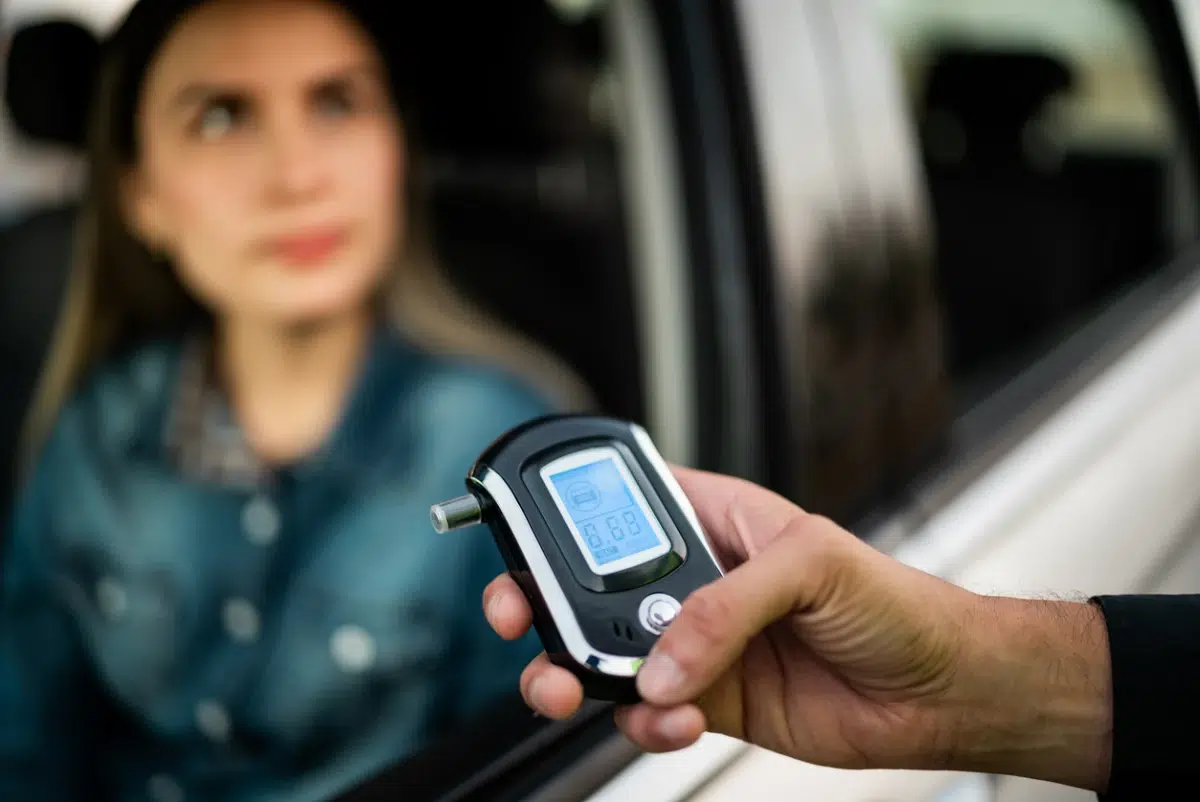



Many drivers, operating under the assumption that legalization equals leniency, find themselves caught in a confusing legal web during traffic stops. The most pressing question for many is: Does weed show up on a breathalyzer test in Virginia?
The intersection of cannabis use and traffic safety is a complex field where science often lags behind legislation. While you may be familiar with the standard roadside procedures for alcohol, the protocols for marijuana are entirely different and often more invasive. Furthermore, because these cases rely heavily on subjective observation, consulting a specialized marijuana DUI lawyer is the most effective way to protect your future.
In this comprehensive guide, we will break down the science of THC detection, the current capabilities of Virginia law enforcement, and what you can expect if you are pulled over under suspicion of marijuana impairment.
Understanding Weed Breath Test Laws in Virginia
The weed breath test laws in Virginia are currently in a state of flux. While the Code of Virginia § 18.2-266 makes it illegal to drive while “under the influence of any narcotic drug or any other self-administered intoxicant,” the state does not have a “per se” limit for THC.
Per Se vs. Impairment Standard
For alcohol, the law is simple: if your BAC is 0.08 or higher, you are legally impaired (per se), regardless of how well you are driving. For marijuana, there is no such number. This means the prosecution must prove through circumstantial evidence—your driving behavior, your appearance, and your performance on Field Sobriety Tests—that the marijuana actually impaired your ability to operate the vehicle.
Implied Consent and Blood Tests
While the answer to “Does weed show up on a breathalyzer?” is no, the answer to “Can they test my blood?” is a resounding yes. Under Virginia’s Implied Consent law, by operating a motor vehicle on a public highway, you have already agreed to submit to a blood test if you are arrested for a DUI.
If you refuse a blood test after an arrest for a marijuana DUI, you could face a charge of “unreasonable refusal.” In Virginia, a first-offense refusal results in a one-year administrative license suspension with no possibility of a restricted license.
The Technical Reality: Alcohol vs. THC Detection
To answer the primary question—does a breathalyzer detect THC in Virginia?—We must first look at how standard law enforcement equipment functions. For decades, the “breathalyzer” (a term often used to describe various brands of Preliminary Breath Test or PBT devices) has been the gold standard for roadside alcohol detection.
How Traditional Breathalyzers Work
Standard breathalyzers are designed to detect ethanol. When you consume alcohol, it is absorbed into your bloodstream and travels to your lungs. As you exhale, a predictable amount of that alcohol is released in your breath. The device uses either fuel cell technology or infrared spectrometry to measure the chemical reaction of ethanol.
Why THC is Different
Tetrahydrocannabinol (THC), the psychoactive component in cannabis, does not behave like alcohol. It is a highly complex, fat-soluble molecule. It does not “off-gas” from the blood into the lungs in the same concentration or manner as ethanol. Therefore, a traditional alcohol breathalyzer—the kind currently found in almost every patrol car in the Commonwealth—cannot and will not show a positive result for marijuana.
If an officer suspects you are under the influence of weed but your breathalyzer result is 0.00, they will not simply let you go. Instead, that 0.00 reading often serves as “proof” to the officer that your perceived impairment must be caused by something other than alcohol, leading them to initiate more rigorous marijuana DUI tests in Virginia.
The Emergence of the Marijuana Breathalyzer in Virginia
While the standard equipment fails to detect cannabis, the technology is evolving. You may have heard rumors about a specialized marijuana breathalyzer in Virginia being deployed to catch “stoned drivers.”
The Development of THC Breath Tests
Several tech companies, most notably Hound Labs, have spent years developing a THC detection breath test in Virginia and other legalized states. These devices are designed to capture THC molecules on a user’s breath. The scientific hurdle has always been the “window of detection.” While alcohol correlates clearly with breath levels, THC levels in the breath drop significantly within two to three hours after use.
Current Status in the Commonwealth
As of today, the Virginia State Police and local departments (such as those in Fairfax, Prince William, or Loudoun County) do not use THC breathalyzers as standard evidentiary tools. The technology is still undergoing rigorous peer review and has not yet met the “Daubert Standard” or “Frye Standard” required for scientific evidence to be broadly admissible in Virginia courts.
However, the lack of a cannabis impairment test in Virginia that works through breath does not mean the police are powerless. It simply means they move to other methods that are often harder to challenge without expert legal counsel.
The Role of the Drug Recognition Expert (DRE)
Because there is no simple breath test, Virginia law enforcement relies heavily on “Drug Recognition Experts.” These are officers who have undergone specialized training to identify the physical signs of seven different categories of drugs, including cannabis.
A DRE evaluation is much more involved than a standard DUI stop. It involves:
- Checking your pulse at three different intervals.
- Measuring your pupil size in different lighting conditions.
- Performing a “Lack of Convergence” test (seeing if your eyes can track an object moving toward your nose).
- Assessing your muscle tone.
If a DRE determines you are impaired by cannabis, their testimony becomes a cornerstone of the prosecution’s case.
The Problem with Marijuana DUI Tests in Virginia: The “Residual THC” Trap
One of the most significant challenges in marijuana DUI tests in Virginia is the nature of THC itself. Because THC is fat-soluble, it can remain in a person’s system for weeks after the psychoactive effects have vanished.
A blood test might show a high level of THC metabolites in a driver who hasn’t smoked in three days. In a courtroom, a prosecutor might try to use these numbers to suggest active impairment. This is where a knowledgeable defense becomes vital. A lawyer can argue that the presence of metabolites does not equal impairment at the time of the stop, effectively dismantling the prosecution’s scientific “proof”.
Comprehensive Coverage: What Happens During a Stop?
If you find yourself in a situation where you are being questioned about cannabis use, it is important to understand the sequence of events.
- The Initial Observation: The officer notes “erratic driving,” “weaving,” or “failure to maintain lane.”
- The Contact: The officer claims to smell marijuana or sees “shake” in the console. This provides the basis for further investigation.
- Field Sobriety Tests: You will be asked to perform the Walk-and-Turn or One-Leg Stand. Note that these tests were developed to detect alcohol, not weed. Research shows that frequent cannabis users can often pass these tests even while under the influence, while sober individuals with physical injuries might fail them.
- The Breathalyzer: You may be asked to blow into a PBT. As established, this is looking for alcohol.
- The Arrest and Blood Draw: If the officer believes they have probable cause, you will be taken to a hospital or a station for a blood draw. This provides the DUI marijuana breathalyzer info (or rather, the drug content info) the state needs to prosecute.
How to Defend Against a Cannabis DUI in Virginia
Facing a DUI charge is a daunting experience, but it is far from a guaranteed conviction. A robust defense strategy often involves:
- Challenging the Search and Seizure: Did the officer have a legitimate reason to pull you over? If the initial stop was illegal, any evidence gathered afterward—including the smell of marijuana or the results of a blood test—may be suppressed and ruled inadmissible.
- Critiquing the DRE Evaluation: Drug Recognition Expert training is not foolproof. Many medical conditions, such as diabetes, inner ear infections, or even extreme fatigue, can mimic the signs of drug impairment. We look for inconsistencies in the officer’s report to cast doubt on their conclusions.
- Analyzing the Lab Results: Blood samples must be handled according to strict protocols. If the lab technician failed to follow proper “chain of custody” procedures, or if the blood was not stored at the correct temperature, the results could be skewed.
Conclusion: Don’t Leave Your Future to Chance
So, does weed show up on a breathalyzer test in Virginia? For now, the answer is no, but that doesn’t make the road any safer for the average driver. The Commonwealth’s transition to legal marijuana has created a “wild west” of enforcement where drivers are often targeted based on outdated stereotypes and subjective observations.
The consequences of a DUI conviction are severe. Beyond the immediate threat of jail time and fines, you face a permanent criminal record, skyrocketing insurance rates, and the loss of your right to drive. This is not a situation you can “talk your way out of” on the side of the road.
If you have been charged, you need an advocate who understands both the law and the science.
Whether the prosecution is relying on a blood test, a DRE report, or the “smell of weed,” we have the experience to pick their case apart. Don’t let a misunderstanding of the law or a faulty roadside test define your future. Contact us today for a confidential consultation and take the first step toward protecting your freedom and your license.